The Annual Discount Is a Price on Your Flexibility
The proposal has two price columns for identical work, and the cheaper one asks for twelve months. Before taking it, work out what a bad first quarter costs under that term. That is what the discount is priced against.
Two columns on the same proposal, one decision
Everything else matches: scope, deliverable counts, the named account team, reporting cadence. The only variable is the term, thirty days notice or a lower rate held for twelve months, with a date to decide by. The layout invites one instinct: subtract, multiply by twelve, decide that leaving that much on the table is careless. That prices only the year that goes well.
What the discount is actually pricing
Charging less for a longer commitment is ordinary across service businesses, so the discount itself is not a red flag. A longer term smooths revenue and removes the cost of re-selling you, the logic behind how agencies structure retainer pricing.
Be precise about who pays for what. The discount is not a loyalty reward. It is compensation for taking on a client who cannot leave after a bad quarter, and you are selling that option cheapest in exactly the case where it is worth most. The agency’s downside is a difficult client. Yours is a bill you keep paying.
The math that actually matters: run the bad-quarter case
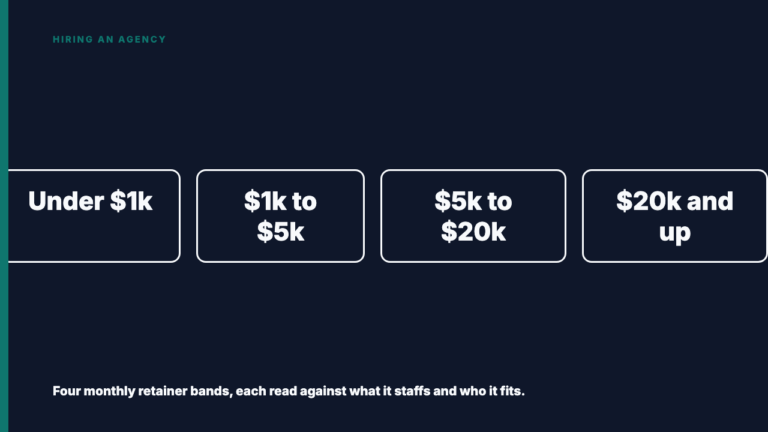
Every figure below is illustrative and invented. Substitute your own proposal’s numbers. Say the month-to-month retainer is $6,000 and the annual rate is ten percent lower at $5,400. That saves $600 a month, or $7,200 across the year, which is the number the proposal wants you looking at.
Now assume the first quarter goes badly. Not catastrophically, just clearly not working: thin briefs, a vanished strategist, reporting that answers nothing. Month to month, you have spent $18,000, you serve notice, you stop. On the annual column you have spent $16,200 for the same quarter, so you are $1,800 ahead, and you owe nine more months at $5,400. That is $48,600 committed to a relationship you have already judged.
So: $7,200 of savings if the year goes well, against $48,600 of exposure if it does not. The honest question is how confident you actually are.
What actually predicts a bad first quarter
Confidence should rest on evidence, not on how the pitch felt:
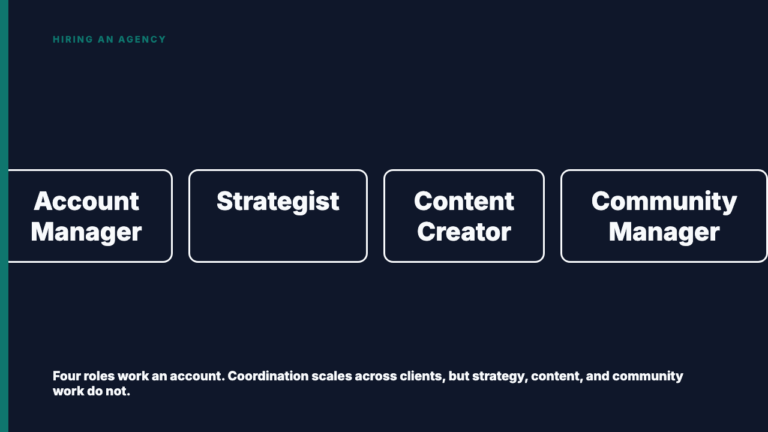
- You have worked with this account team, not just this agency. The named strategist, account manager and writer deliver the work, not the brand.
- Access and onboarding were smooth during the sale. Questions about accounts, permissions and approvers before contract signal a working process. If access first surfaces after signing, month one stalls.
- A paid pilot happened first. Nothing predicts better than watching this team work for you, so run a paid pilot before any long-term commitment.
- The scope is precisely defined. Counts, formats, turnaround windows, revision rounds, approvers. Vague scope becomes an argument in month three you cannot walk away from.
The fewer you can tick, the more plainly the discount asks you to pay upfront for trust you have not verified.
Three ways to get the discount without the full lock-in
These are proposals to put on the table, not guarantees.
- Stage the discount across quarterly commitments. Commit one quarter at the month-to-month rate, with the rate stepping toward the annual number at each renewal. The agency gets the same twelve months in the good case, and the discount is earned in stages rather than granted upfront.
- Buy a termination window inside the annual term. Sign twelve months with a defined right to exit after a set number of months, with a stated notice period and no penalty beyond it, in exchange for a smaller discount than the full annual rate.
- Tie the extension to a checkpoint, not the calendar. Make the annual rate contingent on agreed milestones by a named date, reverting to month-to-month if they are missed. Keep the checkpoint on what the agency controls: output volume, turnaround, reporting quality.
When the annual term is actually the right call
Refusing every annual term on principle costs money for nothing. The clearest case for signing is evidence: a completed paid pilot, or a prior engagement with these same people where you watched them handle things going wrong. Then the discount buys a known quantity cheaper. The second is a ramp long enough that leaving early wastes it, since the opening stretch goes on access, assets, approvals and a publishing rhythm, which buys a working operation rather than readable results, as what the first month with an agency actually buys sets out. If nothing is assessable until well past the first quarter, month to month was never a live option.
What to check in the contract language itself
The discount percentage is the smaller half of this decision; four clauses set the actual cost of being wrong. Termination: can you leave for convenience, or only for cause, which means proving breach. Kill fee: get a number, not a formula tied to remaining contract value. Notice period: does it run from your notice or the next billing cycle, a full month of fees apart. Unused committed months: refundable, creditable or forfeited, and the document should say which. Read all four against what to check in a social media agency contract.
Before you sign either column
One proposal is no benchmark for either column. Browse vetted agencies to see how others structure scope and terms, or list your agency free if you sell agency services.
FAQ
Is it normal for agencies to charge more for month-to-month than annual terms?
Yes, and it is not a warning sign by itself. A shorter commitment carries more risk for any service provider, so a premium for flexibility is standard pricing, not a trick.
What size discount should make me suspicious instead of pleased?
No percentage threshold is worth trusting, and any figure offered as an industry average deserves the question of where it came from. Run the bad-quarter comparison on your own proposal instead: your retainer, the discounted rate, the months you would still owe, then ask whether the savings look large next to the exposure.
Can I negotiate a mid-contract exit clause into an annual agreement?
It is a reasonable ask. The two that get furthest are a defined exit window, the right to terminate after a set number of months with stated notice, and a staged discount tied to quarterly checkpoints. Expect to trade some discount for either.
Sources
- Your First 30 Days With a Social Media Agency: What You Owe, Partner in Social, retrieved 2026-09-07.