The Agency Setup Fee: What It Should Buy, and When It’s a Deposit
You are holding a proposal with a monthly retainer you can live with and, underneath it, a separate one-time line that says “onboarding” or “setup” and nothing else. Before you sign, you need to know what that line buys, whether it is fair, and what you can ask for in return.
The one line on the proposal nobody itemises
Picture a proposal, purely illustrative. The retainer is described in detail: channels, posts per week, a monthly report. Below it sits “Onboarding fee, one-time” with a figure and no description. The retainer has been itemised for pages. The onboarding charge is a lump.
That asymmetry is your opening. In our experience of reading proposals, a separate setup charge is common enough that it should not alarm you. But common is not justified. Our position: every setup charge should map to something you can open, read and keep after the contract ends. This post says nothing about what a fee should cost, because size is the wrong question. Content is the right one.
Three honest reasons an agency charges one
First, senior time is front-loaded. Someone experienced audits your accounts, studies your category and settles a strategy before a single post ships. Second, there is account and tooling setup: access, an asset library, an approval workflow, reporting dashboards. Third, there is unrecoverable risk. The agency invests before it knows the relationship will last, and wanting protection against an early exit is the legitimate part of any deposit-like fee.
All three can be described in writing, and a fair agency can defend its fee on paper. The problem is never that a fee exists. It is vagueness, which lets a padded fee hide next to a real one.
The artifact test: what each dollar of setup should leave behind
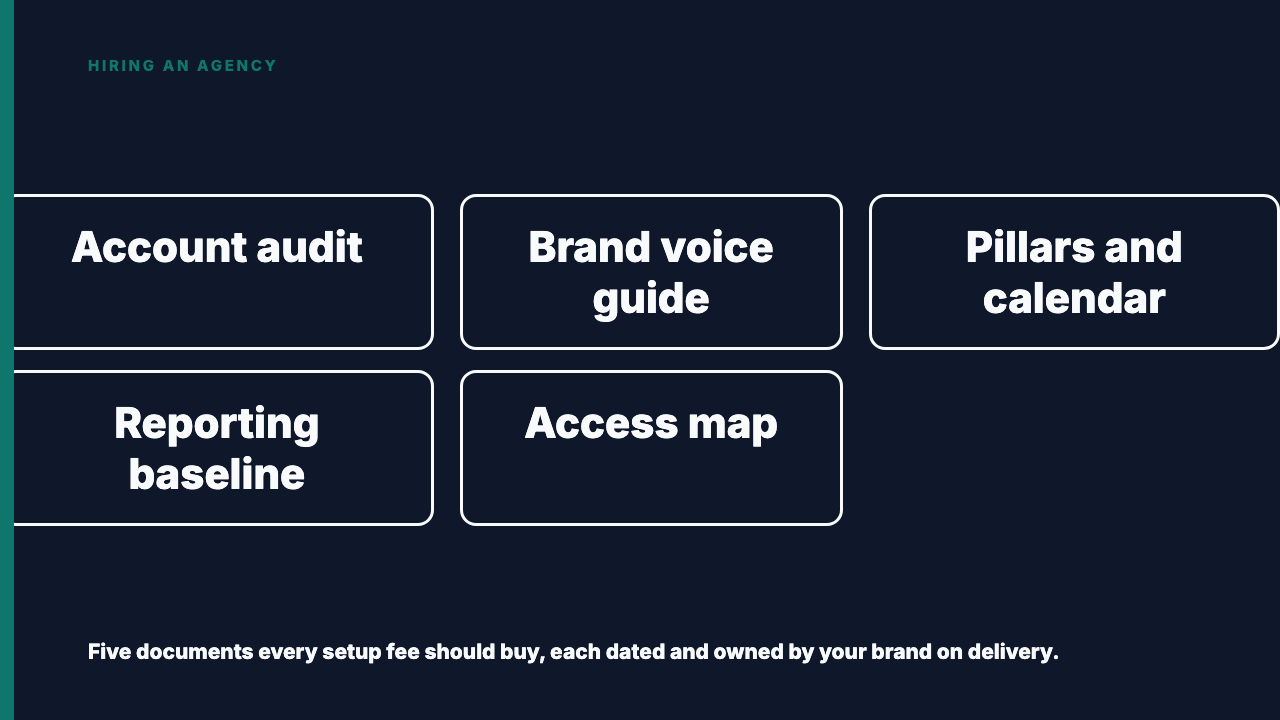
These are the documents we recommend you ask for. This is our standard for what to request, not a claim about what the industry delivers. For each, ask for a format, a due date, and written confirmation that your brand owns it on delivery.
- Account and competitor audit. Good: specific findings about your own profiles and your gaps against named competitors. Bad: a generic checklist that could go to any brand.
- Brand voice guide. Good: do and don’t examples, approved and banned phrasing, escalation rules for complaints. Bad: adjectives like “friendly and professional.”
- Content pillars and first calendar. Good: a defined first period with format, owner and approval date for every item. Bad: a promise of a calendar “in the first weeks.”
- Reporting baseline. The starting numbers recorded before the agency touches the account, so later results have something to be measured against. Ask for a dated snapshot you can check against the platforms yourself.
- Access and tooling map. Who holds which login and role on every account, documented, so you can rebuild control if the agency leaves. Our standard: the agency gets access through assigned roles on each platform, never through your personal login.
Two proposals, same fee, very different deals
Take two hypothetical agencies. Each charges “the setup fee” on top of the retainer. No amounts appear here because the amount is not the difference.
| Agency A | Agency B | |
|---|---|---|
| What the line says | Four named deliverables: audit, voice guide, pillars with first calendar, reporting baseline | “Onboarding and strategy” |
| Due dates | Each dated inside the first month | None |
| At week four | You check off documents or point at the late one | You have a statement that onboarding is underway |
Two questions separate them on a call: which documents will I receive and by when, and what do I keep if we stop after month one? Agency A answers in seconds. Agency B changes the subject to the retainer.
When the setup fee is really a deposit
The tells: no deliverables listed, nothing due by a date, a refusal to itemise, and a fee called “non-refundable” with no work attached. A deposit is a legitimate instrument. It should simply be called one, credited against fees, and governed by payment terms. The mechanics are in our post on payment terms buried below the retainer number. Whether a payment is credited or kept, and whether any of it is refundable, depends on the contract wording, so get the answer in writing.
So counter. Ask to convert the fee into a credit against the first invoices, or to split it so part is released when the documents arrive. If the agency refuses both, treat the refusal as vetting information. How it handles a reasonable change request before you are a client previews how it will handle one afterward.
Getting the fee into writing
These are points to raise with your own counsel, not legal advice.
- List setup deliverables in the scope of work with due dates and an acceptance step, not in the sales deck. See how to read an agency scope of work.
- State that the audit, voice guide, calendar and access map belong to your brand on delivery and survive termination.
- Settle what happens to the fee if you end the contract during onboarding: whether any is refundable, and which documents must already be delivered.
- Match delivery dates to your first 30 days with a social media agency, including what you owe in access and approvals.
Questions to ask before you sign the line
For wider context, see how social media agency pricing is structured.
“Which documents will I receive and by what date?” Good: each document named with a calendar date. Bad: “everything you need to get started.”
“Who writes them, and how many hours of senior time are in this fee?” Good: a named role and a rough hour count. Bad: “our team handles it.”
“What do I keep if we stop after month one?” Good: a list of documents and confirmation you own them. Bad: “that would not really come up.”
The decision rule: no document attached, no setup charge, or reclassify it as a deposit credited against your first invoices.
Compare agencies that will itemise
Browse vetted agencies and put these questions to each. If you run an agency that already itemises onboarding, list your agency free.
FAQ
Is an onboarding fee normal for a social media agency?
It is common enough not to alarm you, but common is not justified. Normal means the agency can name what the fee covers and when you receive it.
Can I negotiate or refuse the onboarding fee?
Yes, though it is a negotiation, not a guarantee. Ask in order: itemise it, convert it to a credited deposit, tie release to delivery of the documents, or drop it if nothing tangible is attached.