The Internal Case for Hiring a Social Media Agency
You have already decided. Somewhere between covering four platforms alone and the launch that went out two days late, you concluded the brand needs outside help. Nobody above you has decided anything, because nobody has asked them to. This post starts where a CEO, CFO or founder approves the spend, or does not.
Why this argument usually never gets made
The default pattern is absorption. A platform gets added because a competitor is there. Video becomes the format that works, so you learn to edit. Replies slip from same day to whenever there is a gap. Because it never fails loudly, it never reaches anyone who could fund a fix.
The cost is the decision itself. Leadership cannot reject what they were never shown, so the gap stays invisible until it surfaces badly: a missed launch window, a competitor suddenly everywhere you are not, the resignation of the person holding it together. Most hiring guides skip this step: they assume the budget line exists. If nobody has given you a number, your job is not evaluation. It is authorisation.
What a CEO or CFO is actually evaluating
“We need more content” is not an argument. Neither is “our social presence is falling behind.” Both describe a feeling and invite the same reply: compared to what? The framing that works is capacity. You have a fixed number of people and hours, and that ceiling produces a specific list of things that are not happening. Not “the team is stretched,” which is effort, but “the launch calendar assumes video on two channels and we produce none,” which is output.
The budget owner is not evaluating whether the creative work will be good. They are weighing a cost they can see against what is not getting done. Opportunity cost, not quality.
Lay out the capacity math before you lay out a price
Here is a hypothetical. A marketing lead at an equipment supplier has one generalist on social, realistically a third of that job. Current weekly output: two LinkedIn posts, one on Instagram, comments answered in a batch every few days, no video, no paid. The plan leadership already approved: three product launches, a trade show, a new region. Covering that means near daily LinkedIn in launch weeks, video on a cadence, same day replies, paid behind each launch.
The gap then states itself. Video is produced by nobody, replies run three days behind, the new region has no content at all. That is not workload, it is three commitments nothing covers. Use no borrowed number here: no industry average, no “brands typically post this often,” no invented figure.
The three objections you will actually get
- “Just hire someone in-house instead.” Compare it on paper rather than deflecting. A hire must be sourced, interviewed, offered, worked through a notice period and ramped before producing anything. An agency team is already staffed and starts against a defined scope. One hire is also a single point of failure: one resignation and you are back here.
- “We tried an agency before and it didn’t work.” Do not defend the model. Ask what specifically went wrong. Wrong scope? Juniors staffed on an account a senior team pitched? Nobody internally owning it? Each is addressable in the next contract, so show how your proposal addresses that point.
- “We don’t have the budget right now.” This usually means not at that size, and not for that long. So change the size. A bounded, priced pilot with a defined scope and end date is a smaller decision than a twelve month retainer.
Why in-house alone usually can’t close the gap
There is a difference between adding capacity and adding capability. A hire adds hours, which you need. What a hire cannot add on day one is exposure: an agency running many accounts has watched formats work and fail across categories, and knows which parts of a scope get abandoned first when things get busy.
Say it carefully, it is easy to hear as an insult. This is not a claim that in-house marketers are less skilled, it is a claim about what one person can be expected to have seen. If the gap really is volume, the hire may be right, so be ready to compare in-house, agency, and hybrid models out loud.
Frame the ask as a decision, not a request for resources
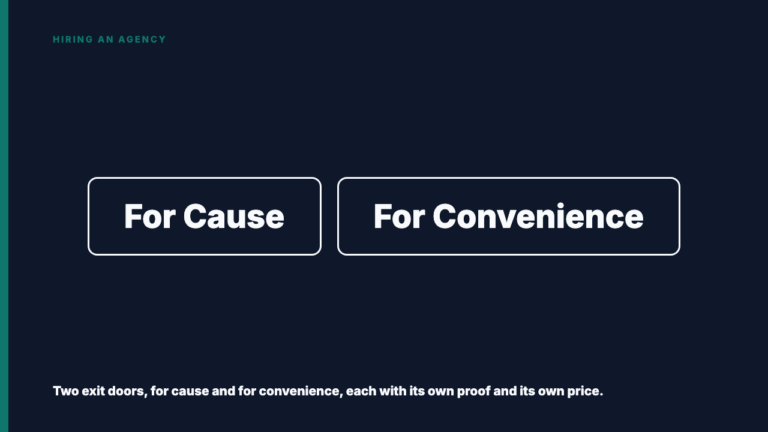
Open-ended requests get deferred to next quarter. A decision has a size, a scope and a date. Rather than an annual retainer, propose a paid pilot instead of a full retainer: one defined body of work, one stated budget band, one stated window. Attach a review date, not “let’s try it and see.” Name what the pilot should produce, when you assess it, and the three outcomes: extend, change scope, or stop.
What to actually bring into the room
- One page, not a deck. Current output on one side, what the plan requires on the other, the gap in plain sentences.
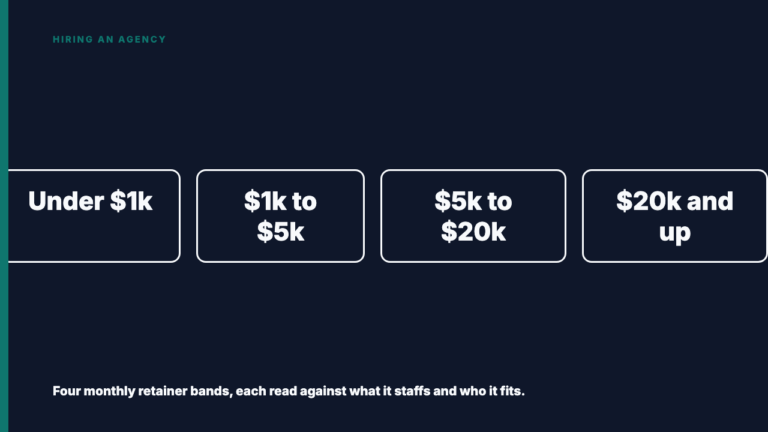
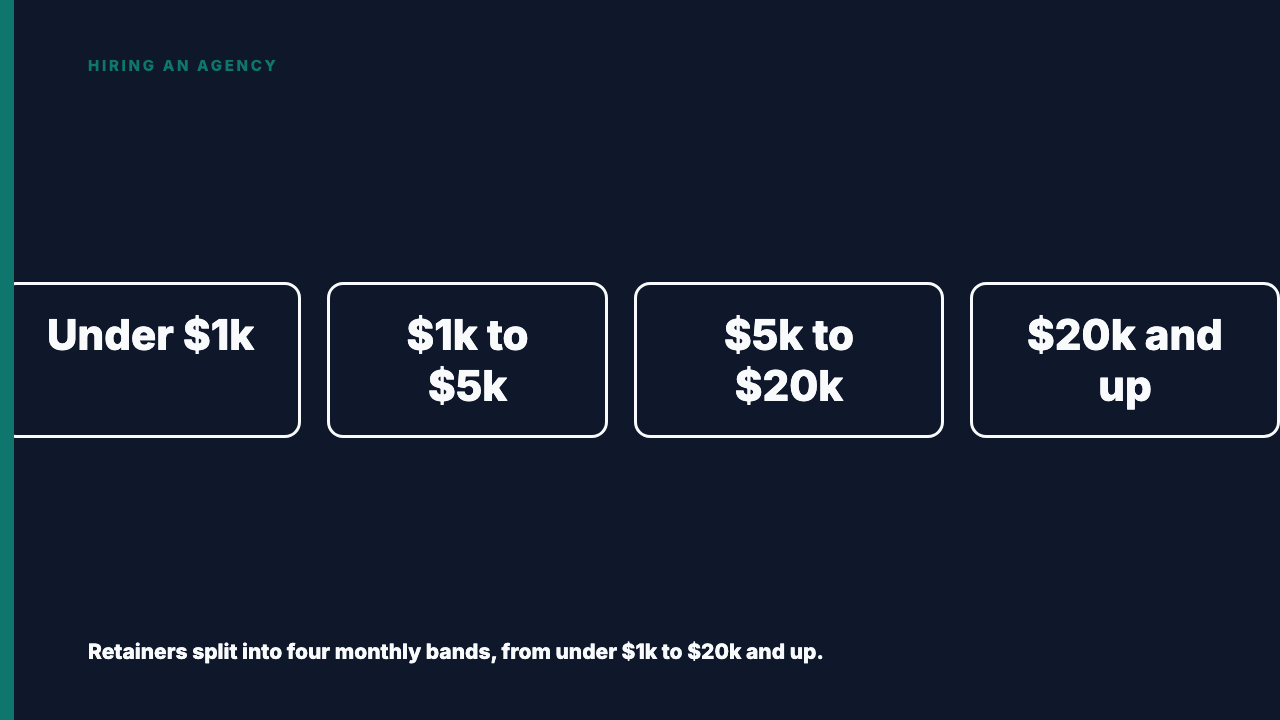
- A real budget band. Retainers here fall into four monthly bands: under $1k, $1k to $5k, $5k to $20k, and $20k and up. Name the band your scope sits in, using the budget bands agencies actually price in rather than a figure you estimated.
- A decision point. What the pilot must have produced, and by when, before anyone discusses a longer deal.
- An answer to the next question. Leadership will ask who runs this day to day, so know who should own the agency relationship internally.
Once the budget is approved
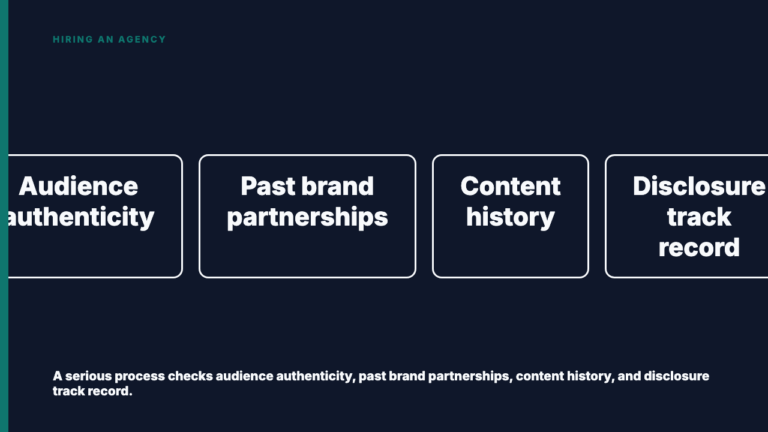
The shortlist starts once you have a number and a scope. You can Browse vetted agencies by specialism, location and type of work. If you run an agency, you can list your agency free.
FAQ
How much budget should I ask for at this stage?
Do not lead with a final annual number, the largest version of the ask and the easiest to reject. Ask instead for approval to run a paid pilot within a stated band, referencing published pricing bands rather than a figure worked out on the way to the meeting. Partner in Social groups retainers into four monthly bands: under $1k, $1k to $5k, $5k to $20k, and $20k and up.
Who should actually make this case, the marketing lead or someone more senior?
Build it yourself. The person closest to the capacity gap is the only one who can describe it accurately. The ask lands better with a department head or budget owner as co-sponsor, since they speak finance’s language.
Sources
- Social Media Agency Pricing: The Four Budget Bands Explained, Partner in Social. Fetched 2026-09-06.